In a world where safety and security are paramount, advancements in technology play a critical role. One such innovation is radiation detection in cargo screening. This cutting-edge tech is not just about spotting the bad stuff; it’s about ensuring that what goes unseen doesn’t pose a hidden threat. From its scientific underpinnings to its practical applications, radiation detection is transforming how we safeguard our borders and infrastructure.
How it works: the science behind the tech
Alright, let’s get into the nitty-gritty of how this tech actually works. At its core, radiation detection hinges on identifying gamma rays and neutrons emitted by radioactive materials. Now, these aren’t your everyday rays of sunshine; we’re talking about high-energy particles that can reveal a lot about what’s inside a cargo container or vehicle.
Most systems use something called NaI(Tl) gamma detectors. Sounds fancy, right? These detectors are great at picking up gamma rays because they have what’s known as high energy resolution. Basically, they can distinguish between different types of radiation with impressive accuracy. This makes it possible to not only detect the presence of radioactive material but also identify what kind of material it is. Then there are neutron monitoring modules, which add another layer of detection capability. They’re particularly useful for spotting shielded Special Nuclear Material (SNM), which could be hidden inside thick containers.
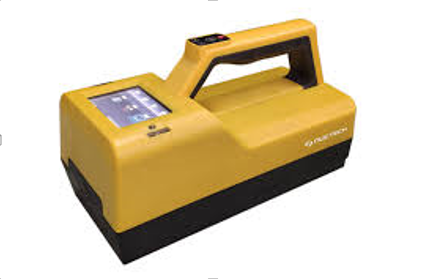
The tech doesn’t stop there. Some systems are designed to be portable, like handheld monitors for on-the-go inspections, while others are fixed installations at strategic points like border crossings and ports. Whether it’s a walk-through portal for pedestrians or a drive-through system for vehicles, each setup has its own set of features tailored to specific needs. It’s like having a suite of tools in your security arsenal, each one designed to tackle a different aspect of the rad detector puzzle.
Keeping us safe: the benefits of radiation detection
Now, why should anyone care about all these technical details? Simple: safety and efficiency. Radiation detection systems are game-changers when it comes to non-intrusive inspections. Imagine having to manually check every single cargo container that crosses a border. Not only would it be time-consuming, but it would also be far from foolproof.
With screening cargo using radiation detection, it’s possible to screen large volumes of cargo quickly and accurately. This means fewer delays and less disruption to the flow of goods. And let’s be honest, in today’s fast-paced world, time is money. But more importantly, it’s about preventing dangerous materials from slipping through the cracks. Whether it’s nuclear material that could be used in a dirty bomb or smuggled goods that pose a risk to public health, these systems provide an essential layer of security.
Another big plus is the ability to customize solutions based on specific needs. Airports might need different setups compared to seaports or border crossings. The flexibility of these systems means they can be adapted to various environments and requirements. Plus, with ongoing advancements in technology, these systems are only getting better and more efficient.
See also: The Essentials Technicalities of Lifeguard training
Challenges and solutions: making it work seamlessly
Of course, no technology is without its challenges. One of the biggest hurdles is ensuring that these systems are both effective and user-friendly. After all, what good is cutting-edge tech if it’s too complex for operators to use effectively? That’s where training programs come into play. By providing comprehensive training for operators, companies can ensure that their staff are well-equipped to handle the technology and make the most of its capabilities.
Then there’s the issue of maintenance and support. High-tech systems require regular upkeep to stay in top condition. Offering robust technical support and after-sales service is crucial for minimizing downtime and ensuring continuous operation. Some providers even offer rental options and spare parts to make it easier for clients to maintain their systems without breaking the bank.
Another challenge is keeping up with evolving threats and regulatory standards. As new types of contraband emerge and regulations change, radiation detection systems need to adapt accordingly. This requires ongoing research and development efforts to stay ahead of the curve. Fortunately, many companies in this field are committed to innovation and continuously work on improving their products.
In conclusion, radiation detection is an indispensable tool in modern cargo screening. By combining advanced technology with practical applications, it offers a powerful solution for enhancing security while maintaining efficiency. Though there are challenges to overcome, the benefits far outweigh the drawbacks, making it a vital component in safeguarding our borders and infrastructure.