
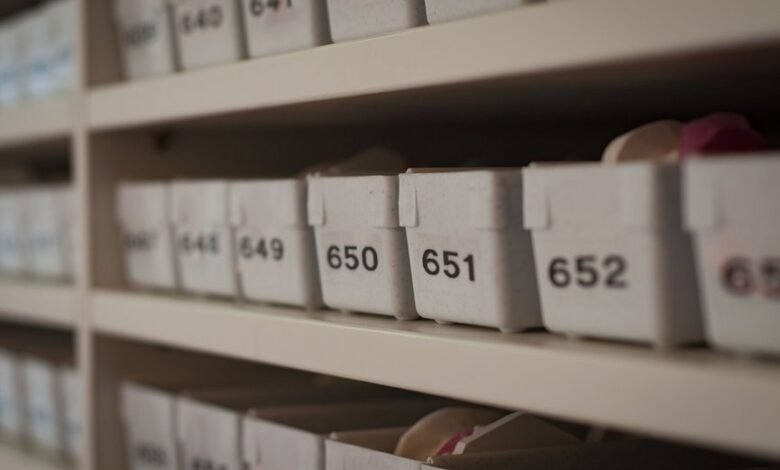
The Search Verified Registry Archives for 3389104427, 3496362359, 3512775294, 3885775282, and 3298576443 form a centralized catalog that authenticates and traces search-related identifiers across platforms. The records emphasize provenance, timestamps, and source attestations to support reproducible results within an archival framework. Clear metadata enables auditable lineage, while disciplined querying and duplicate management reduce false positives. The framework invites careful scrutiny and disciplined inquiry, leaving the reader with a question about how these traces will withstand cross-platform scrutiny.
What Is the Search Verified Registry and Why These IDS Matter
The Search Verified Registry is a centralized catalog that records verified search-related identifiers (IDs) used to authenticate and trace search results across platforms. The registry safeguards integrity by documenting provenance and linking results to trusted sources. This framework supports two word discussion ideas and registry verification, offering clarity for researchers, policymakers, and freedom-minded users seeking accountable, transparent search ecosystems.
How to Verify Records Across 3389104427, 3496362359, 3512775294, 3885775282, 3298576443
To verify records across the identifiers 3389104427, 3496362359, 3512775294, 3885775282, and 3298576443, a systematic cross-reference process is required that traces provenance, timestamps, and source attestations. The procedure emphasizes cross archive alignment and duplicate resolution, documenting each comparative assertion, preserving chain-of-custody, and ensuring reproducible results within an archival, freedom-minded evaluative framework.
Interpreting Results: Dates, Authors, and Provenance Clues
Interpreting results requires careful reading of metadata and content marks produced during the verification process across the identified archives. The analysis emphasizes dates, authors, and provenance clues, distinguishing genuine temporality from reconstruction.
Interpretation nuances emerge in cross-archive alignments, while semantics consistency reinforces reliability. Clear provenance clues support auditable lineage, enabling confident scholarly use without conflating edits or omissions within the trusted corpus.
Practical Strategies to Optimize Queries and Spot Duplicates Across Archives
Such queries across multiple archives demand disciplined strategies to minimize false positives and ensure reproducible results, particularly when duplicates and near-duplicates recur under varying metadata schemas. The practice emphasizes efficient indexing, rigorous duplicate detection, and cross archive reconciliation, aided by precise provenance tagging to track origins. A restrained, methodical approach yields verifiable findings while preserving archival freedom and clarity.
Conclusion
In these archives, order is dignity and doubt is a stamp. The registry’s justice is reproducibility, where provenance wears a sober cloak and timestamps keep honest time. Yet satire lingers like a careful marginal note: even exact IDs cannot outpace human curiosity, or temptation to duplicate. So researchers tread with meticulous intent, cross-checking sources, flagging anomalies, and savoring the quiet irony that clarity requires constant verification, not complacent certainty. Archival rigor remains the punchline and the discipline.